Is it permissible to pray with a prayer stool? What the scholars say
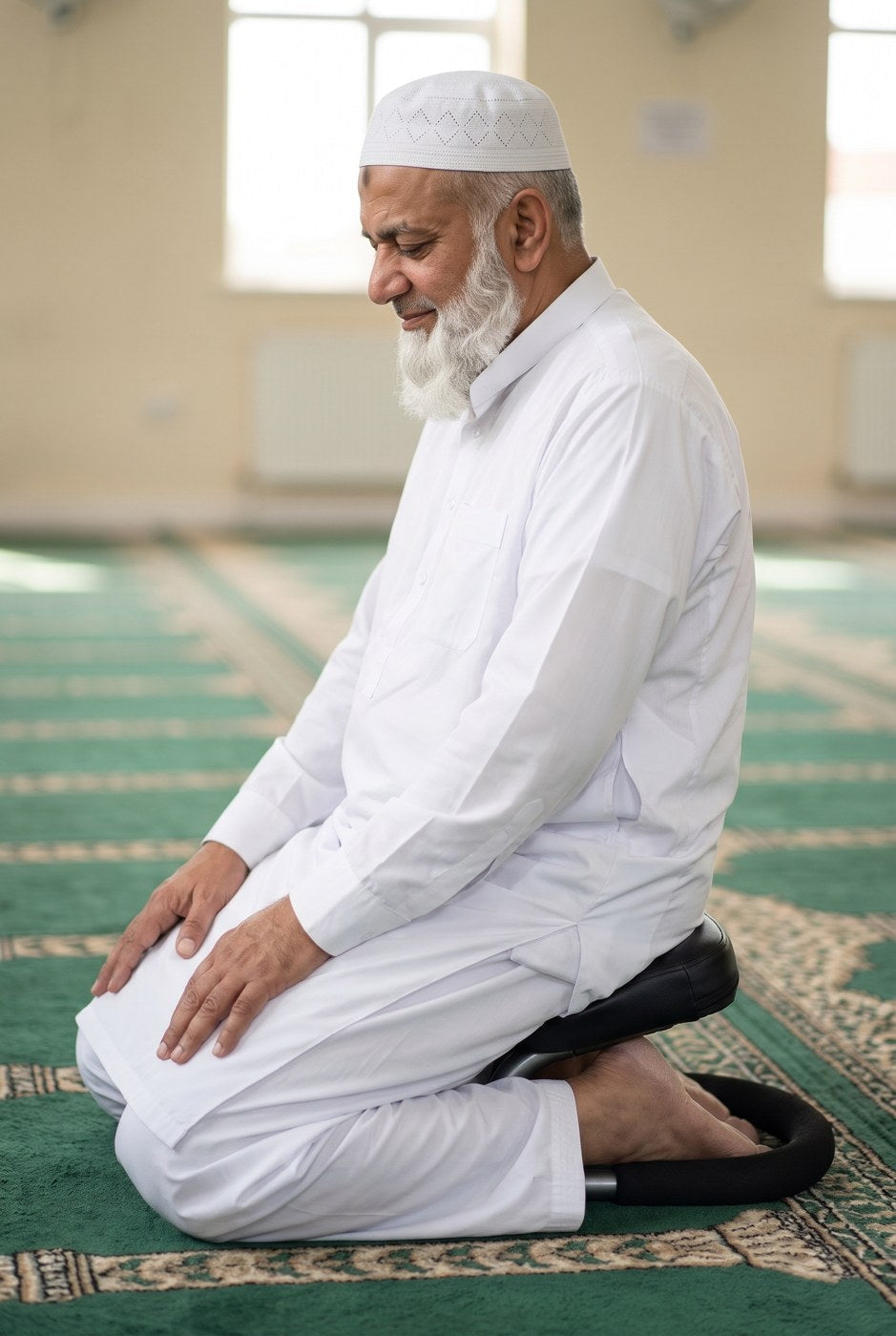
“Is it allowed?” “Is it a bid'ah?” “Will my prayer still count?” These are the questions we read most often from parents, grandparents and their children. This page gathers what the Qur'an, the Sunnah and recognised scholars say about using a seat when the sitting positions of the prayer have become too painful — with every source linked, so you can check it yourself.
1. Islam asks of you only what you can do
لَا يُكَلِّفُ اللَّهُ نَفْسًا إِلَّا وُسْعَهَا
“Allāh does not charge a soul except [with that within] its capacity.”Surah Al-Baqarah 2:286 · quran.com
“So fear Allāh as much as you are able.”Surah At-Taghabun 64:16 · quran.com
The Prophet ﷺ taught the sick how to pray according to their ability:
“Pray while standing and if you can't, pray while sitting and if you cannot do even that, then pray lying on your side.”The Prophet ﷺ · Sahih al-Bukhari 1117 · sunnah.com
And he ﷺ said: “if I order you to do something, then do of it as much as you can.” (Sahih al-Bukhari 7288)
2. What the scholars say about a seat for the sitting positions
Our stool is for one precise situation: you can still stand, bow and put your forehead on the ground, but sitting back on your heels — between the two sujood and in the tashahhud — has become too painful. The scholars of the Sunnah have answered this exact case.
The Permanent Committee for Fatwa (al-Lajnah ad-Dā'imah, Saudi Arabia)
A man of about 75 who could not bend both knees asked: “sometimes I sit on a chair and prostrate with the imam, and between the two prostrations or for the tashahhud I sit on the chair.” The Committee answered:
جلوسك على الكرسي حال التشهد وبين السجدتين لا حرج فيه، للعذر المذكور، وبالله التوفيق
“Your sitting on the chair during the tashahhud and between the two prostrations is not a problem, because of the excuse mentioned. And success is from Allah.”Fatawa al-Lajnah ad-Dā'imah · quoted in IslamWeb fatwa 286951 · English: al-feqh.com
Shaykh Ṣāliḥ al-Fawzān, member of the Council of Senior Scholars
في حال الصلاة جالسا إن قدر أن يجلس على الأرض فهو أحسن وأكمل، وإن لم يقدر جلس على كرسي ويفعل على الكرسي ما يقال ويفعل في الجلوس على الأرض
“When praying seated, if he is able to sit on the ground, that is better and more complete. If he is not able, he sits on a chair, and does on the chair what is said and done when sitting on the ground.” And on the prostration: “he prostrates on the ground if he can.”Shaykh Ṣāliḥ ibn Fawzān al-Fawzān, 17/08/1433 AH · Arabic text and translation (original: alfawzan.af.org.sa/node/14011)
Shaykh Muḥammad ibn Ṣāliḥ al-ʿUthaymīn
On what counts as a real hardship in the prayer:
الضَّابطُ للمشقَّةِ: ما زالَ به الخشوع؛ والخشوعُ هو: حضورُ القلبِ والطُّمأنينةُ
“The criterion for hardship is that which takes away khushūʿ — and khushūʿ is the presence of the heart and tranquillity.”Ibn ʿUthaymīn, al-Sharḥ al-Mumtiʿ · quoted in IslamWeb fatwa 221410
If sitting on your heels hurts so much that you think of your knees instead of Allah, that is the hardship the scholars speak of.
Shaykh Muḥammad al-Mukhtār al-Shinqīṭī
إن تَعذَّر عليه أن يجلس انتقل بالانفصال هذا لكونه متصلاً بالأرض عن طريق الكرسي، فكان في حكم الجالس
“The scholars said: if it is impossible for him to sit, [he may use a seat], since he is connected to the ground through the chair, so he takes the ruling of one who is sitting.” But: “if he is able to come down and sit … he must do so, and not sit on a chair.”Sharḥ Zād al-Mustaqniʿ · quoted in IslamWeb fatwa 174131
3. So, is it a bid'ah?
A bid'ah is a new act of worship. The stool adds nothing to the prayer: you stand, recite, bow and prostrate exactly as the Prophet ﷺ taught. It only helps you sit when your knees can no longer fold. The scholars quoted above did not call a seat used by someone with a real excuse a bid'ah: the Permanent Committee answered “it is not a problem, because of the excuse”. It is part of the ease of this religion:
“Religion is very easy and whoever overburdens himself in his religion will not be able to continue in that way.”The Prophet ﷺ · Sahih al-Bukhari 39 · sunnah.com
4. Who should — and should not — use it
The scholars are just as clear on the other side: whoever can sit on the floor without real hardship should do so. And Shaykh al-Fawzan reminds us that the prostration is made on the ground whenever one can. That is exactly why the stool is low and stays behind your heels: your sujood stays on the ground.
- For you if the sitting positions cause real pain: arthritis, knee surgery or replacement, hip or ankle problems, pregnancy, old age.
- Not needed if you can sit on your heels without real difficulty.
- Never a reason to leave sujood on the ground if you are able to do it.
5. Will my reward be less?
“When a slave falls ill or travels, then he will get reward similar to that he gets for good deeds practiced at home when in good health.”The Prophet ﷺ · Sahih al-Bukhari 2996 · sunnah.com
This page gathers published answers; it is not a fatwa from AERESO. Every situation is different: if you are unsure about yours, ask your local imam or a scholar you trust.
Keep your sujood on the ground
The Sujud Stool is only for the sitting positions — your forehead stays on the floor.
Discover the Sujud Stool